
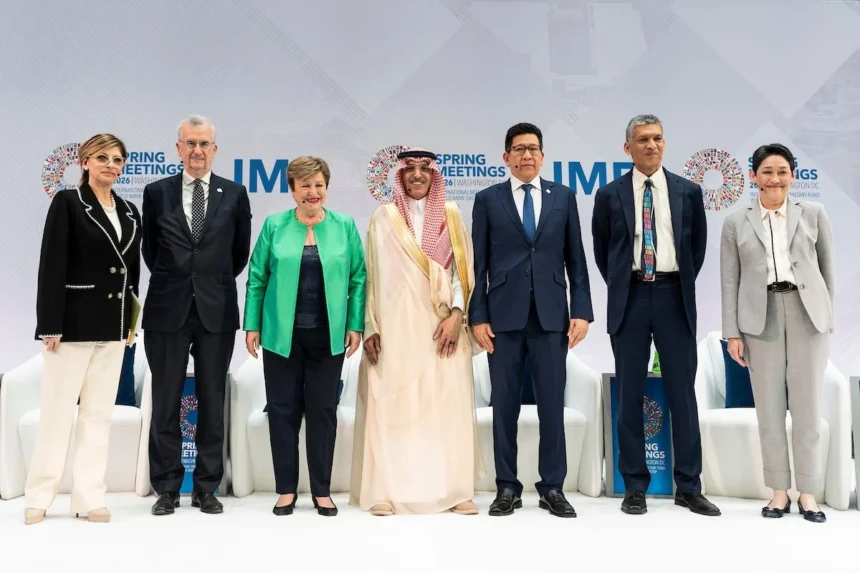
The Managing Director of the International Monetary Fund (IMF), Kristalina Georgieva, has highlighted the impact of global shocks on economies.
To that end, she sent a particular warning to central banks to be extra vigilant and not rush into their policy decisions in the face of shocks.
In a post on her X page, she said, “When shocks hit, policy choices matter. Demand boosting measures can backfire in the face of supply shocks.
African central bank governors are warning that the global debt system is failing to respond effectively to the continent’s growing economic challenges.
Speaking at the International Monetary Fund’s African Consultative Group meeting at the IMF headquarters in Washington DC on Tuesday, April 14, 2026, the Governor of the Bank of Ghana, Dr Johnson Asiama, called for urgent reforms to better support vulnerable economies.
“In this context, we reiterate our call for a fit-for-purpose Low Income Country Debt Sustainability Framework, alongside a fast-tracked and more tailored implementation of the Three Pillar Approach to effectively support members already in, or at high risk of, crisis,” he said.
The African Consultative Group is a high-level platform that brings together finance ministers, central bank governors and senior IMF officials during the Fund’s Spring and Annual Meetings.
It provides an opportunity for African policymakers to coordinate positions and engage directly with the IMF on key economic challenges.
Dr Asiama said African economies are currently facing a difficult combination of tight global financial conditions, rising debt vulnerabilities and recurring climate shocks.
He noted that these pressures have been intensified by spillovers from the conflict in the Middle East, which have contributed to higher inflation and worsening external balances across many countries.
“…it is imperative that IMF emergency financing windows remain well-resourced, responsive, and easily accessible to support members facing acute balance-of-payment pressures.”